Desert Garages Change the Water Heater Replacement Math
Most water heaters fail on an ordinary weekday. A puddle shows up beside the garage tank, or the shower runs lukewarm and then cold, and suddenly the household needs a decision it hasn’t thought about in ten years. The pressure to pick the fastest swap is strong, and that’s usually when people skip the questions that matter most.
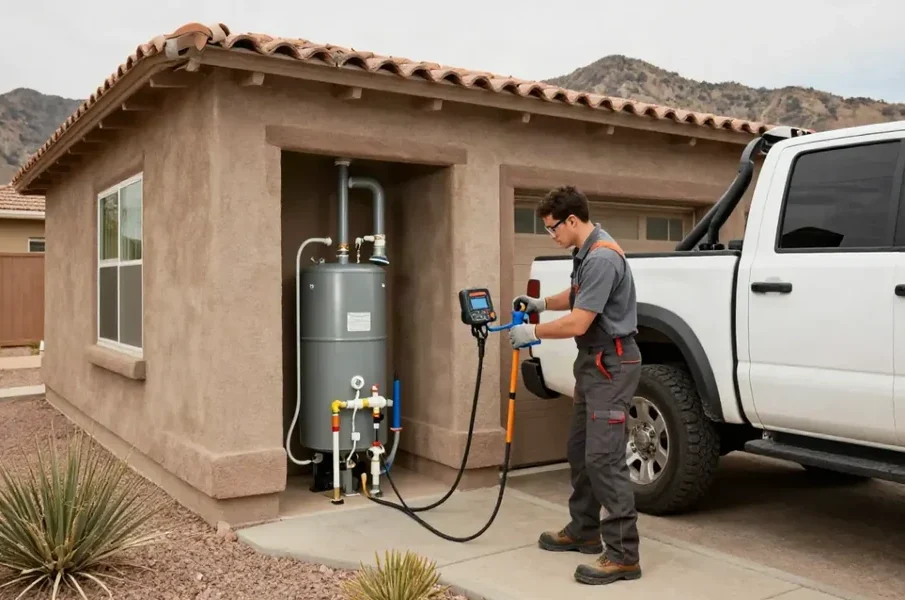
In hot, dry valleys, those questions look a little different than they do in cooler parts of the country. People researching water heater replacement in Henderson are dealing with garages that bake through summer, water that leaves mineral scale on everything and utility bills that climb during the long cooling season. Each of those affects which heater makes sense and how long it will last.
A few minutes of planning can turn an emergency purchase into an upgrade. The right choice depends on where the heater sits, what fuel the house already uses, how many people take showers back to back and how much the household cares about upfront cost versus operating cost.
Why Tanks Wear Out Sooner in Very Hard Water
A standard tank water heater is basically a steel cylinder lined with glass, plus a sacrificial anode rod that corrodes so the tank doesn’t. Very hard water speeds up two kinds of wear. Minerals settle as sediment at the bottom of the tank, where they insulate the water from the burner or element. Gas units then run longer and louder, often popping or rumbling. Electric elements can burn out early when they get buried in scale.
The anode rod tells the other half of the story. Once it’s used up, the tank itself starts to rust from the inside. Homes with water softeners can actually burn through anodes faster, because softened water is more conductive. Many tanks that fail at seven or eight years never had the anode checked once.
That pattern matters at replacement time. Whatever goes in next will face the same water, so scale protection and simple maintenance access belong in the plan from day one.
The Hot Garage Advantage
Here’s where desert homes have an unusual edge. Heat pump water heaters work like an air conditioner running in reverse: they pull heat from the surrounding air and move it into the tank. They’re most efficient when the air around them is warm, and few spaces stay as warm as a closed garage in a desert summer.
According to ENERGY STAR, a certified heat pump water heater can cut water heating costs substantially compared with a standard electric tank. In a hot garage, the unit has a constant supply of free heat for most of the year. It also cools and dehumidifies the space around it while it runs, so the garage loses a little of its oven feel.
These units aren’t a perfect fit everywhere. They need open air around them, so a cramped closet usually won’t work. They also need a drain for condensate, and they make a low fan hum. Most full-size models run on a dedicated 240-volt circuit, though newer plug-in versions are designed to use an ordinary outlet near where an old electric tank stood.
When Gas Still Makes Sense
Homes that already have a gas tank can usually replace it like for like at the lowest upfront cost. A new gas tank needs proper venting, enough combustion air and correct clearances, and venting rules have tightened over the years. An older vent pipe that worked with the previous unit may not suit the new one. Garage installations also have specific requirements meant to keep the ignition source away from fuel vapors.
Where Tankless Fits
Tankless heaters save floor space and never run out of hot water during a long shower. In very hard water, though, the narrow passages in the heat exchanger collect scale quickly. Owners need to descale on a regular schedule or install treatment upstream. Gas tankless units often need a larger gas line than the old tank used, which adds to the project cost.
What Happens on Replacement Day
A well-run swap follows a predictable order, and knowing it helps you spot shortcuts:
- Shut off power or gas and close the cold water supply.
- Drain the old tank, which can take a while if sediment clogs the drain valve.
- Disconnect and remove the old unit, then check the floor, pan and nearby walls for water damage.
- Set the new heater on a pan or stand, then secure it with seismic straps where local code requires them.
- Connect new water lines, a properly piped temperature and pressure relief discharge, and an expansion tank if the system is closed.
- Fill the tank completely before turning on power or gas, so the elements or burner never run dry.
- Test the relief valve, check every joint for leaks and set the temperature.
Permits and inspections usually apply, even for a straight swap. The inspection is less about paperwork and more about the parts that protect people: venting, relief valves, gas connections and strapping.
Sizing for How the Household Actually Lives
Bigger isn’t automatically better. Tank heaters list a first hour rating, which tells you how much hot water they can deliver in a busy hour. A house where three people shower back to back before school needs more than a couple who shower at different times of day. An oversized tank keeps a lot of water hot that nobody uses, and an undersized one leaves the last person in line with a cold shower.
Recent changes in the household count too. A new soaking tub, a teenager’s long showers or a home office where someone now stays home all day can change the right size. Replacement is the easiest point to fix a heater that never quite fit.
Planning Before the Puddle
The calmest replacements happen before anything fails. Checking the age on the rating plate, listening for rumbling, looking for rust at the fittings and keeping an eye on the drain pan all show when the end is near. A household that already knows whether it wants another gas tank, a heat pump unit or tankless can act as soon as it decides, instead of taking whatever is on the truck that afternoon.