Follow the Rain Off Your Roof
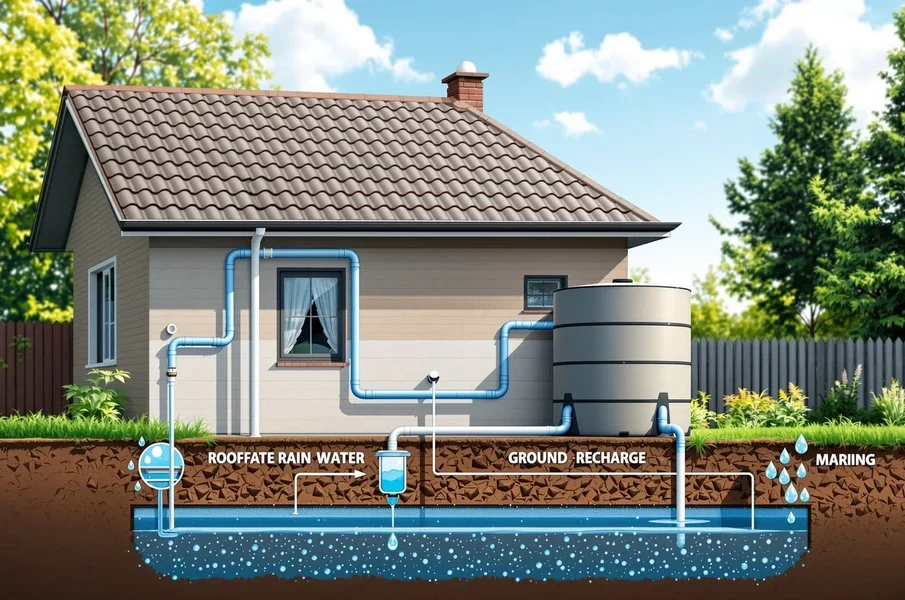
Imagine a single raindrop landing on your roof during a storm. It slides down a shingle, reaches the edge, drops into the gutter, runs to a downspout and finally lands on the ground. Every stop along that route is a place where something can go wrong, and most homeowners never think about the trip until water shows up where it should not be.
A South Point roofing company that also lists gutters, soffit and fascia among its services sees that whole route every day, because the roof, the edge and the gutter work as one system. Here is the journey of that raindrop, and what keeps it on course.
The Edge Where Everything Begins
The roof edge is where the water leaves the shingles. Behind the gutter sits the fascia, the board that runs along the ends of the rafters. Under the overhang is the soffit, the underside panel. These parts are easy to overlook, but they hold the gutter and shield the framing from moisture.
InterNACHI, the home inspectors’ association, notes in its guide to inspecting gutters and downspouts that inspectors judge a gutter’s slope by comparing its edge against the fascia. If the fascia is rotted or the gutter has pulled away, the whole system loses its alignment.
A Gutter Needs a Gentle Tilt
According to the same guide, inspectors are not required to measure slope, but they should confirm that gutters drain toward the downspouts. They watch for standing water, which tells you the gutter is not draining properly. A gutter that holds water is a gutter that is not doing its job.
Leaves, Trees and the Habit of Cleaning
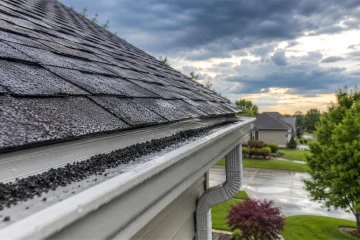
The guide points out that deciduous trees can fill gutters with leaves, and it says inspectors should stress regular cleaning to prevent moisture problems. When a gutter is packed with debris, water has nowhere to go but over the edge or back under the shingles.
Rust, Cracks and Leaking Joints
Inspectors are told to check that gutters are free of rust, cracks and holes in order to prevent leaking, and to look for leakage at downspout joints. A small drip at a seam may seem harmless, but it keeps the fascia and soffit damp, which is a common way for wood to rot over time.
Hanging On Tight
The guide calls for checking the proper attachment of the downspout to the structure and the connection between the downspout and the gutter. A gutter full of water and leaves is heavy, so loose fasteners can turn into a sagging, pulling-away gutter during the next big storm.
Where the Downspout Delivers
The last leg of the journey is the one that matters most to the foundation. The guide says inspectors should check that downspouts divert water 4 to 6 feet away from the home’s foundation. A downspout that empties right at the wall puts that water next to your basement or crawl space instead of away from it.
Reading the Clues Yourself
This section is general advice and not from the guide. After a rain, walk the house and look for overflowing gutters, water streaking down siding, peeling paint along the roof edge, stains on soffits, and puddles beside the foundation. Any of those suggests the raindrop is not following its intended route.
About the Company Behind the Link
Nest Roofing says on its website that it offers roofing, siding, soffit and fascia, commercial roofs, gutters, repairs, insurance work and restoration, with free inspections and free estimates and an instant quote tool. It says it serves West Virginia, Ohio and Kentucky, and lists South Point, Huntington, Charleston, Ashland and Morehead among many towns. The site shows a GAF warranty graphic and a GAF Certified Plus badge but gives no warranty terms. It does not state years in business or license numbers, so ask the company for those details directly.