

Tracing Wildfire Smoke Through Your Home’s HVAC System
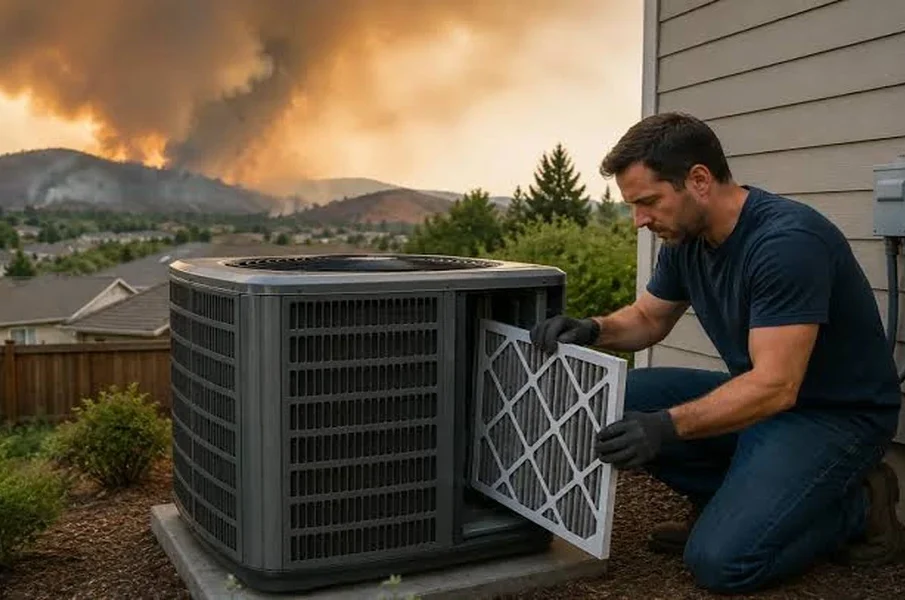
Anyone living along the South Coast in December 2017 remembers how Thomas Fire smoke hung over Santa Barbara, Montecito and Carpinteria for weeks, right in the middle of heating season. Plenty of households learned that a closed house is not automatically a clean one. Particles small enough to settle deep in the lungs slip through gaps nobody notices, ride along the ductwork, and get blown into bedrooms by the very equipment meant to keep everyone comfortable.
That difference between a sealed-up house and genuinely breathable air is familiar ground for Crocker Refrigeration Heating & Air, a family business working across Santa Barbara, Goleta and Carpinteria since 1980. Because fire seasons keep pushing air quality up homeowners’ list of worries, the company treats it as a service in its own right, alongside the Carrier equipment it installs as a factory authorized dealer.
The most useful way to think about smoke indoors is as a journey. It has to get in, get moved around, and get caught somewhere along the way. Follow that path and the weak spots in most homes start to show.
It Usually Gets In Before the Ducts Ever See It
Most smoke enters through the building itself rather than the heating and cooling system. Older Santa Barbara homes are full of small openings. Original wood windows, stucco cracks around hose bibs, raised floors over crawlspaces, attic hatches and recessed ceiling lights all let outdoor air seep inside.
What drives that seepage is pressure. Every time a bathroom fan, kitchen hood or clothes dryer pushes air out, the same volume has to come back in from somewhere, and on a smoky day it arrives unfiltered through whatever cracks are easiest. Running exhaust fans in short bursts instead of leaving them on helps. A blower door test shows exactly where a drafty house leaks so those spots can be sealed before the next fire.
The Fresh Air Opening You Might Not Know About
Some systems deliberately bring outdoor air inside. Newer homes built to California’s energy code often have a ventilation duct tied to the return, an energy recovery ventilator, or a smart thermostat programmed to run the fan for fresh air on a schedule. Commercial rooftop units often have economizers that open wide whenever outdoor air feels mild, as it often does on a coastal fire day.
During a smoke event, those openings should be closed or switched to recirculate. A whole-house attic fan deserves special mention. It can pull thousands of cubic feet of air per minute through open windows, and running one under a smoky sky fills the house in minutes.
Everything Rides on a Few Inches of Pleated Media
Once smoke is inside, the filter is the main thing standing between it and your lungs. The thin fiberglass filters that come with many furnaces are designed to protect the blower from dust and lint. They do almost nothing against smoke. Local air officials recommend upgrading to at least MERV 13, while checking with an HVAC professional that the system can actually handle it.
That caveat matters. Denser filters resist airflow, and equipment sized around a cheap filter can struggle with a tight one. A deeper media cabinet holding a four or five inch filter delivers MERV 13 performance with far less resistance than a one inch version. Fit matters too, since any gap around the edge lets air skip past.
Watch for these signs that a filter is choking the system.
- Airflow feels weak at the registers farthest from the air handler.
- The return grille or filter door whistles while the blower runs.
- Cooling turns lukewarm, or frost appears on the refrigerant lines of a heat pump or air conditioner.
- The furnace shuts off early and restarts repeatedly as its safety limit trips.
- A new filter looks gray within days, a sign it is loading faster than any normal schedule assumes.
When smoke is heavy, setting the thermostat fan to “on” instead of “auto” keeps air moving through that filter constantly. A furnace blower can do this even in homes without air conditioning.
Leaky Ducts Can Undo a Good Filter
Many local homes have the filter at the return grille in a hallway ceiling, with the air handler sitting in the attic or under the floor. Any return leak between that grille and the equipment draws in attic or crawlspace air that never touches the filter. Leaks on the supply side create a different problem, pushing conditioned air out and leaving the house under negative pressure that pulls smoke through every crack mentioned earlier.
Sealing joints with mastic or foil tape rated for ducts, rather than the cloth tape most people picture, fixes both issues. It also trims energy bills in ordinary months.
Mini-Splits and Window Units Play by Their Own Rules
Ductless heat pumps recirculate room air, which is good news, but their washable mesh filters catch lint and pet hair rather than fine smoke. Clean the mesh often during a fire and pair each zone with a portable purifier.
Window air conditioners usually have a vent lever that lets outdoor air in, and it should be closed. Single-hose portable units exhaust room air outside, so they depressurize the space and draw smoke in through gaps around doors. Evaporative coolers pull all their air from outdoors and are best switched off entirely until conditions improve.
Building One Clean Room Instead of Chasing the Whole House
Even a well-tuned central system struggles in a leaky house, which is why county air officials center their smoke guidance on a single protected space. They suggest choosing a room where you spend the most time, usually a bedroom, and running a HEPA purifier there, noting these units can cut indoor particle levels by about 90 percent. The Association of Home Appliance Manufacturers’ advice on using an air cleaner during wildfire smoke adds a practical detail, recommending the unit sit toward the middle of the room on high rather than tucked into a corner where its airflow gets choked.
Match the purifier’s clean air delivery rate to the room size and keep the door closed while it runs. A box fan with a MERV 13 filter taped to its back makes a capable budget version, provided it is never left running unattended. Skip any device marketed as an ozone generator, since ozone irritates the lungs. California certifies air cleaners that stay within safe ozone limits, and only those belong on the shopping list.
When the Sky Turns Blue Again
Smoke leaves evidence behind. Ash settles on the outdoor condenser and clogs its fins, so after switching off power at the disconnect, a gentle rinse with a garden hose clears it without bending anything. The indoor filter should be replaced even if it hasn’t reached its usual date, and if it was bypassing air, the indoor coil may need a professional cleaning before summer.
Fire is part of life on this stretch of coast, and the homes that handle smoke best were usually prepared during calm months. Tightening the house, sealing ducts and settling on the right filter long before the next red sunset means the system spends its next smoky week protecting the people inside rather than circulating the problem.


